Your Guide to Choosing and Installing Home Garden Irrigation Systems to Ensure Plant Sustainability and Water Saving
Introduction: The Importance of Effective Irrigation for Your Home Garden
A home garden is an oasis of beauty and relaxation, but maintaining its splendor requires continuous care, and one of the most important aspects of this care is effective irrigation. Without a proper irrigation system, your plants may suffer from drought or overwatering, affecting their health and growth. In this comprehensive guide, we will review everything you need to know about home garden irrigation systems, from choosing the most suitable system to its installation and maintenance, to ensure the sustainability of your plants and save precious water.
Why Are Modern Irrigation Systems Essential?
Traditional irrigation using hoses or buckets wastes large amounts of water and does not ensure that water reaches all plants evenly. This is where the importance of modern garden irrigation systems emerges, offering numerous benefits:
- Water Saving: Significantly reduces water waste by delivering it directly to plant roots or distributing it efficiently.
- Plant Health: Ensures that each plant receives the right amount of water at the right time, reducing diseases and promoting healthy growth.
- Time and Effort Saving: Operates automatically, freeing you from the daily watering task.
- Environmental Sustainability: Contributes to the conservation of water resources, which is vital in our world today.
Types of Home Garden Irrigation Systems
There are several types of garden irrigation systems, each with its advantages and uses:
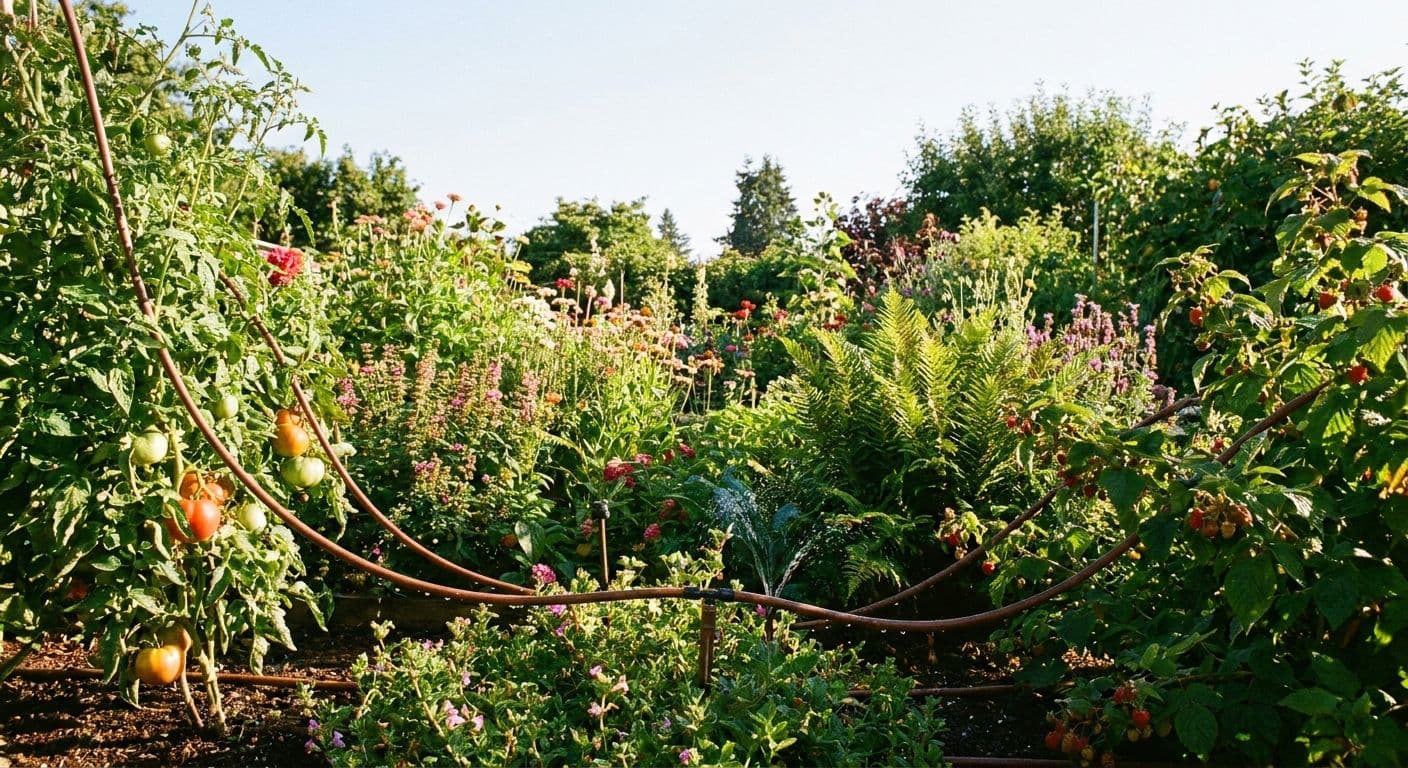
1. Drip Irrigation
- Features: Delivers water slowly and directly to the root zone, reducing evaporation and preventing weed growth. Highly effective in water saving.
- Uses: Ideal for flower beds, vegetables, trees, shrubs, and plants grown in rows.
2. Sprinkler Systems
- Features: Distributes water over a wide area in the form of mist or droplets. Can be hidden (Pop-up) or surface-mounted.
- Uses: Suitable for large grassy areas, lawns, and plants that require surface irrigation.
3. Micro-Sprinklers
- Features: Combines the characteristics of drip irrigation and sprinklers, providing wider coverage than drip but with smaller quantities than traditional sprinklers.
- Uses: Ideal for plants that need higher moisture on their leaves or for smaller areas that are not suitable for large sprinklers.
Factors to Consider When Choosing an Irrigation System
Choosing the right system depends on several factors:
- Garden Size and Design: Is it large or small? Does it have slopes?
- Plant Types and Water Needs: Do you have plants that need a lot of water (like grass) or drought-tolerant plants (like cacti)?
- Soil Type: Sandy soil drains water quickly, while clay soil retains it longer.
- Available Budget: System and component costs vary.
- Water Source and Pressure: Do you have enough water pressure to operate the system you choose?
- Local Climate: In hot and dry areas, drip irrigation is more efficient.
Steps for Installing Home Garden Irrigation Systems (Overview)
While professional installation is the best option for large projects, simple systems can be installed yourself:
- Planning and Design: Draw a diagram of your garden and identify plant locations and water source.
- Purchasing Components: Make sure to buy all necessary pipes, sprinklers/drippers, connectors, valves, and timers.
- Connecting the System to the Water Source: This is usually done via a main valve.
- Laying the Pipes: Follow your design, ensuring pipes are properly secured.
- Installing Sprinklers/Drippers: Place them in the designated locations.
- Installing the Controller (Timer): To schedule irrigation times.
- Testing the System: Run it to check for leaks, water pressure, and coverage.
Maintenance of Garden Irrigation Systems
To ensure your system operates efficiently for years, follow these maintenance tips:
- Regular Inspection: Check sprinklers and drippers regularly to ensure they are not clogged or damaged.
- Schedule Adjustment: Adjust watering times based on weather changes and seasons.
- Filter Cleaning: If your system has filters, clean them regularly to prevent clogging.
- Winterizing the System (if necessary): In cold regions, pipes should be drained of water to prevent freezing and cracking.
Smart Irrigation Systems: A Step Towards the Future
Smart controllers allow you to connect your irrigation system to the internet, enabling remote control and schedule adjustments based on real-time weather data. These systems increase water use efficiency and provide unparalleled convenience.
Conclusion
Investing in home garden irrigation systems is not just a luxury, but a necessity to maintain the beauty and sustainability of your garden, while contributing to the conservation of a vital resource: water. By choosing the right system, installing it carefully, and maintaining it regularly, you will ensure a green, thriving garden for years to come.