Home Garden Paths: Materials and Design Ideas That Withstand Sun Heat and Enhance Your Outdoor Space's Beauty
Home garden paths are an integral part of the beauty and functionality of any home garden. They are not just walkways but design elements that connect different parts of the garden and guide visitors on an enjoyable visual journey. In hot climates, choosing the right materials for designing these paths becomes crucial to ensure their durability and comfort, and to maintain their beauty under scorching sun rays. So, how can we design paths that combine beauty, functionality, and heat resistance?
Why choose heat-resistant materials for your garden paths?
Selecting appropriate materials for garden paths, especially those that can withstand high temperatures, offers several advantages:
- Durability and Longevity: Heat-resistant materials do not crack or damage easily due to expansion and contraction caused by temperature changes, ensuring your paths remain in excellent condition for many years.
- Comfort and Safety: Some materials absorb less heat, making them more comfortable to walk on during hot days and reducing the risk of foot burns, especially for children and pets.
- Ease of Maintenance: Durable materials unaffected by heat are often easier to clean and maintain, reducing the need for frequent repairs.
- Continuous Aesthetics: Maintaining the shape and color of the paths ensures your garden remains attractive and beautiful throughout the year.
Recommended materials for home garden paths that withstand sun heat
When considering the design of home garden paths in a hot environment, focus on materials known for their ability to withstand direct sunlight without being adversely affected or becoming excessively hot.
Natural Stone:
- Granite: Known for its exceptional hardness and resistance to heat and wear. Available in various colors and patterns that add luxury to paths.
- Slate: Features a unique texture and dark colors that absorb some heat but do not damage. Provides a non-slip surface.
- Travertine: A porous stone that absorbs heat well and remains relatively cool under sunlight. Adds a classic and warm touch.
- Pebbles/Gravel: An economical and beautiful option. Gravel allows for good water drainage and does not retain heat for long periods, as heat dissipates quickly between the particles. It can be uncomfortable for barefoot walking but is effective.
Interlocking Pavers:
- Made from compressed concrete, they are extremely durable and resistant to weather elements, including intense heat.
- Available in countless designs, colors, and sizes, allowing for great design flexibility.
- Easy to install and maintain, and damaged pieces can be easily replaced.
Bricks:
- A classic option that adds a rustic or traditional character. Bricks are durable and withstand heat well, although they absorb some of it.
- Their colors vary between red, brown, and orange, and they can be arranged in different patterns to add an aesthetic touch.
Stamped or Colored Concrete:
- Concrete is a strong and heat-resistant material. It can be colored or stamped to mimic the look of natural stone or brick at a lower cost.
- Allows for the design of smooth and wide paths, making it a very practical option.
Creative design ideas for home garden paths
After selecting the materials, creativity in design comes into play to make home garden paths a work of art:
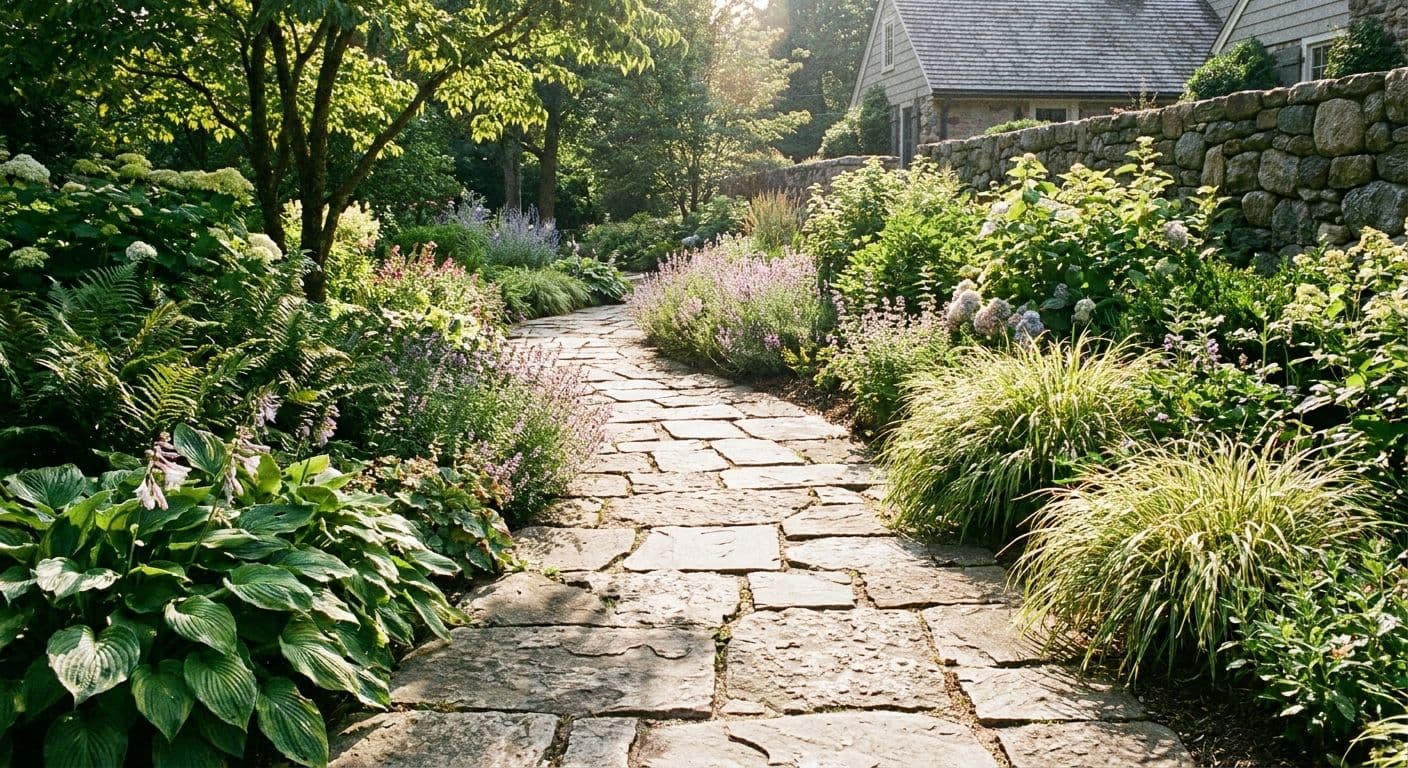
- Winding and Curved Paths: Add a natural and organic touch to the garden, creating a sense of exploration and adventure.
- Geometric Patterns: For modern spaces, straight lines and sharp angles can be used to create paths with a contemporary and elegant character.
- Combining Materials: Do not hesitate to combine two or more types of materials. For example, large natural stone slabs can be used with gravel or grass joints to add contrast and beauty.
- Integrated Lighting: Installing ground lighting along the paths not only adds safety at night but also creates a charming ambiance and highlights the beauty of the design.
- Planting Along the Path: Planting low-growing plants or brightly colored flowers along the sides of the paths adds a vibrant touch and makes the path seem an integral part of the garden.
- Edges and Borders: Using brick, metal, or treated wood edges to define the paths adds an elegant finishing touch and helps maintain the path's shape.
Tips for maintaining home garden paths
To preserve the beauty and durability of home garden paths in the long term:
- Regular Cleaning: Remove leaves and dirt regularly using a broom or leaf blower.
- Weed Control: Remove weeds that may grow between cracks or gravel to maintain a neat appearance.
- Repair Damage: Address any cracks or wear as soon as they appear to prevent the problem from worsening.
- Refilling Joints: For gravel or interlocking paver paths, joints may need to be refilled with sand or small gravel over time.
Conclusion
Designing home garden paths that withstand sun heat and enhance your outdoor space's beauty requires careful planning and smart material selection. By focusing on durable, heat-resistant materials such as natural stone, interlocking pavers, and bricks, and combining them with creative design ideas and appropriate lighting, you can create paths that are not only practical but also add aesthetic and artistic value to your garden, providing you and your guests with an enjoyable and safe outdoor experience, no matter how high the temperatures. Let your garden paths tell a story with every step.