Your Guide to Choosing and Distributing Home Garden Lighting to Enhance Outdoor Beauty
Outdoor spaces serve as a natural breath of fresh air and a comfortable sanctuary for family members, but the true charm of an outdoor yard comes alive in the evening with a thoughtful, well-designed lighting system. Investing in home garden lighting is not just a secondary decorative addition; it is a strategic step aimed at enhancing home security and expanding your living space outdoors with complete comfort and luxury. A balanced distribution of light helps transform a dark garden into a nighttime masterpiece brimming with warmth and vitality.
The Importance of Advance Planning Before Installing Lighting
Before rushing into purchasing lighting fixtures, you should establish a clear and well-considered plan for your outdoor space. The success of home garden lighting relies on achieving a delicate balance among three functional layers:
- Security Lighting: Concentrating light around entrances, gates, and secluded spots to prevent accidents and deter intruders.
- Task Lighting: Providing adequate, comfortable illumination along walkways, seating areas, and around barbecue grills to facilitate safe movement and use.
- Accent Lighting: Highlighting aesthetic features such as water fountains, stone walls, and uniquely shaped trees.
Types of Outdoor Light Fixtures and Their Uses
A wide variety of outdoor luminaires is available on the market, and the secret lies in choosing the right unit for every corner:
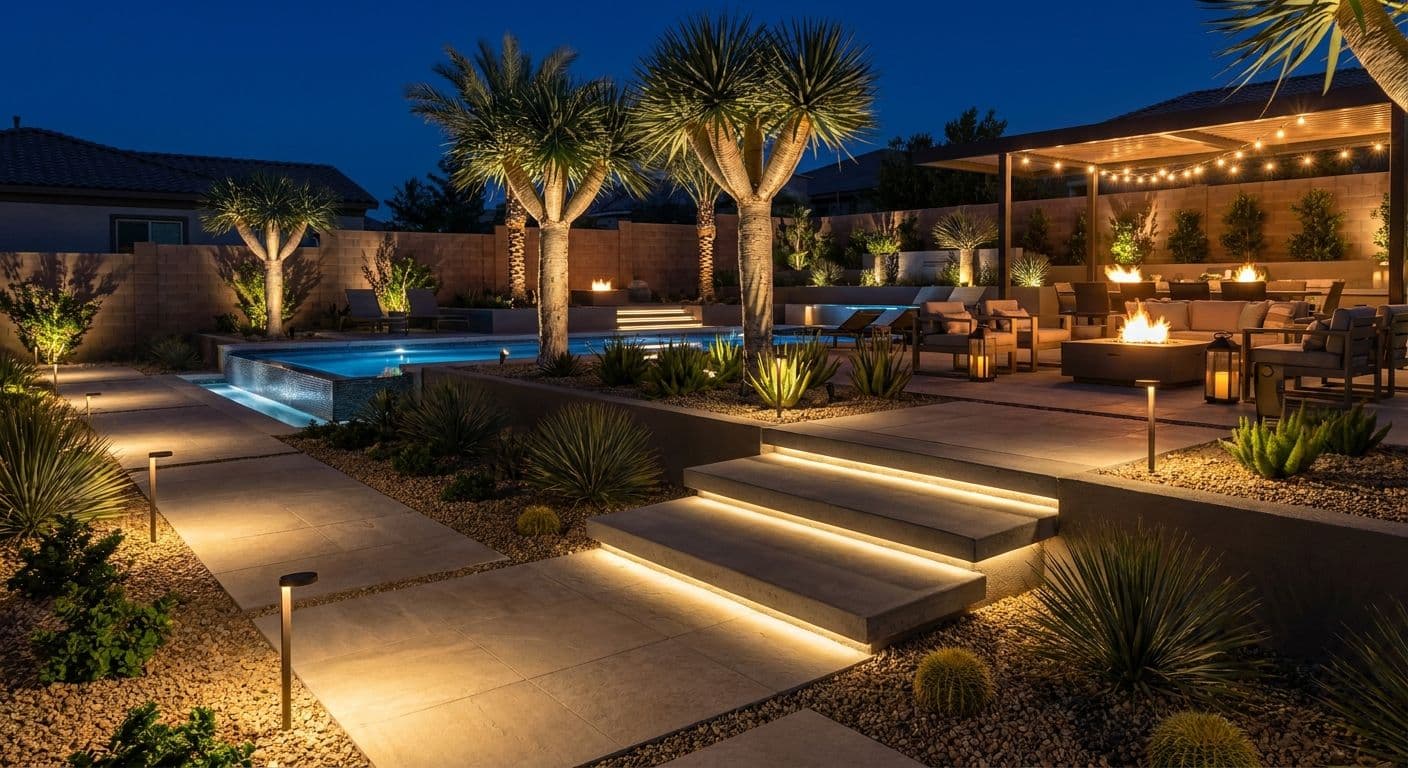
- Bollard Lights: Installed along pathways to cast light downward without causing harsh glare.
- Spotlights: Excellent for directing focused beams of light onto palm trunks, large plants, or artistic sculptures.
- Well Lights (Recessed Ground Lights): Buried flush within stone walkways or grass lawns to deliver a modern aesthetic that smoothly defines borders.
- String Lights and LED Strips: A wonderful choice for creating an intimate, festive ambiance when wrapped around tree trunks or mounted beneath wooden pergolas.
- Solar-Powered Lights: An economical and sustainable solution for open areas where running electrical wiring is difficult.
Innovative Techniques for Nighttime Lighting Distribution
To avoid over-illumination and achieve captivating visual effects, you can implement the following architectural techniques:
- Uplighting: Placing the light source at the base of a tree or wall and directing it upward to emphasize architectural and botanical details.
- Moonlighting: Mounting soft spotlights high in tree branches and angling them downward through the foliage, casting gentle, swaying shadows that evoke the natural magic of moonlight.
- Silhouetting: Positioning a light fixture behind dense plants and aiming it at a plain background wall to produce a striking, dramatic silhouette.
Technical Tips to Ensure Efficiency and Safety
Outdoor fixtures are constantly exposed to fluctuating weather conditions, so the following standards should be kept in mind when setting up home garden lighting:
- Weather Resistance Ratings: Make sure to select fixtures with an ingress protection rating of at least IP65 to guarantee resistance against moisture, rain, and dust.
- Selecting Color Temperatures: Warm white light (ranging between 2700K and 3000K) is always preferable, as it brings out natural greenery and fosters a relaxing atmosphere.
- Smart Controls and Energy Savings: Rely on energy-efficient LED bulbs, and connect the system to timers or motion sensors to automatically turn on at dusk and shut off at dawn.
Mastering the art of home garden lighting gives your outdoor space its unique identity after sunset. By smartly combining safety with aesthetics, you will craft an ideal setting that gathers family and welcomes guests in an exceptional atmosphere throughout every season.