Best Indoor Plants for Offices That Tolerate AC Cold and Artificial Lighting
Are you looking for a way to add a touch of vibrancy and beauty to your office without worrying about harsh conditions? Incorporating indoor office plants not only enhances aesthetic appeal but also contributes to air purification, stress reduction, and increased productivity. However, the office environment often poses a challenge for plants due to dim artificial lighting and cold air currents from air conditioning. Fortunately, there are many robust plants that thrive in these difficult conditions.
Criteria for Choosing the Ideal Office Plants
When selecting indoor office plants, several factors should be considered to ensure their survival and growth:
- Low Light Tolerance: Most offices rely on artificial lighting, so choose plants that do not require direct or bright sunlight.
- Resistance to Temperature Fluctuations: Plants should be able to withstand cold AC and air currents.
- Ease of Care: It's preferable to choose plants that do not require frequent watering or intensive care, to suit busy work schedules.
- Drought Tolerance: Some plants can survive even if you forget to water them for a few days.
Best Indoor Office Plants That Tolerate Harsh Conditions
Here is a list of the best options you can integrate into your office environment:
1. ZZ Plant (Zamioculcas zamiifolia)
The ZZ plant is known for its extreme hardiness and ability to tolerate neglect. It's ideal for offices because it thrives in very low light and can survive long periods without water, thanks to its tuberous roots that store water. It also tolerates AC cold well. It only needs watering when the soil is completely dry, making it an excellent choice for busy employees.
2. Snake Plant (Sansevieria)
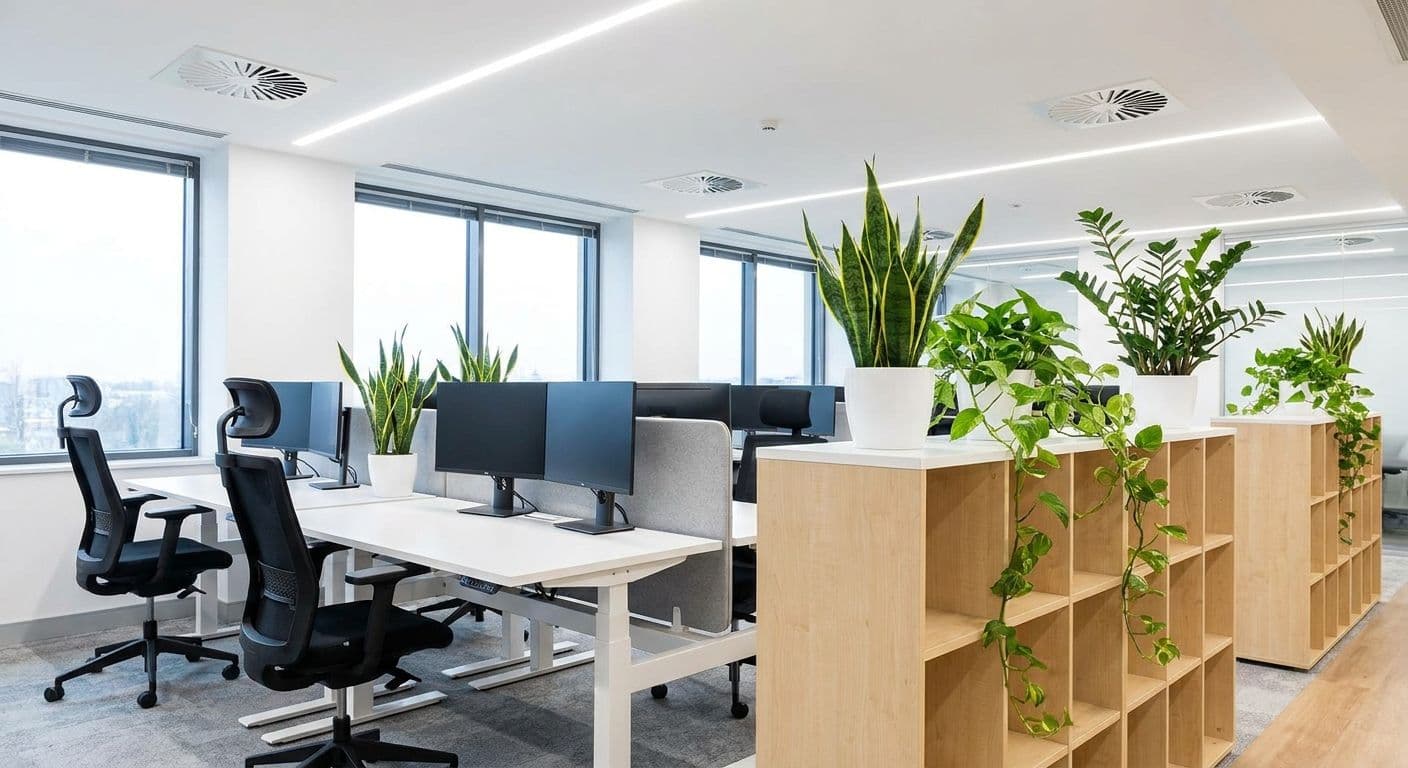
The Snake Plant, also known as "Mother-in-Law's Tongue," is one of the most resilient indoor plants. It can tolerate a wide range of conditions, including low and bright light, and is incredibly drought-resistant. It is also known for its superior ability to purify the air from toxins. It is not significantly affected by AC cold and adds a modern touch with its vertical leaves.
3. Pothos (Devil's Ivy)
The Pothos plant is a very popular choice due to its ease of care and adaptability. It can grow in low to medium light conditions and thrives even with artificial lighting. It can be hung or allowed to trail from a shelf, adding a beautiful green touch. Pothos also tolerates temperature fluctuations well and should only be watered when the soil begins to dry out.
4. Spider Plant (Chlorophytum comosum)
The Spider Plant is an excellent natural air purifier, known for its beauty and ease of propagation. It prefers medium light but can tolerate low light. It tolerates AC cold well and does not require much care. Additionally, it produces small plantlets (called "spiderettes") that can be easily separated and planted, making it an economical and enjoyable option.
5. Dracaena (Dragon Tree)
Dracaena comes in various types and forms, many of which are suitable for the office environment. Dracaena tolerates low to medium light and adds height and structure to the space. Some species, such as Dracaena marginata and Dracaena fragrans, are known for their resilience and ability to withstand harsh conditions, including AC cold. Care should be taken not to overwater them.
6. Peace Lily (Spathiphyllum)
The Peace Lily is a beautiful plant known for its elegant white flowers and air-purifying capabilities. It prefers medium, indirect light but can adapt to low light, although this may affect flower production. It tolerates AC cold reasonably well and indicates its need for water by drooping leaves, making it easy to care for.
Tips for Caring for Your Office Plants
To ensure your indoor office plants thrive, follow these simple tips:
- Water with Caution: The golden rule is "less is more." Wait until the top layer of soil is dry before watering, and avoid leaving standing water.
- Clean Leaves: Regularly wipe leaves with a damp cloth to remove dust, which helps the plant breathe and absorb light.
- Fertilization: Most office plants do not require frequent fertilization. A diluted liquid fertilizer can be used once every two months during spring and summer.
- Regular Monitoring: Check your plants regularly for any signs of disease or pests, and act quickly.
Conclusion
Adding indoor office plants is a simple investment that yields immense benefits for your mental and physical health, and for the aesthetics of your workplace. By choosing the right species that tolerate AC cold and artificial lighting, and following basic care tips, you can enjoy a more vibrant and productive office environment. Choose your plants wisely and enjoy the greenery in your workspace!